
Top 10 Tips
Weed 101
If you choose to get high, knowing your stuff will help you stay in control and maintain your vibe.
What’s up with your weed?
Often referred to as edibles or eddies, this includes any food or drink that contains THC or CBD. The most common type of edible cannabis comes in gummies, chocolate, brownies, juice, tea, and sparkling water or soda.
Learn moreThis type of cannabis can come as loose bud or a pre-rolled joint to be burned and inhaled. You feel the effects of smoking weed very quickly and it usually fades within six hours.
The Penjamin Franklin, the Paul McCartney, The Penji, the Yart…whatever you call it, vaping cannabis is when you breathe in the vapour that comes from heating dried cannabis or concentrates without burning it.
Cannabis extracts include different products, like hash, wax, capsules and vape cartridges, that contain higher levels of THC and CBD than what is found in the cannabis plant. Some products are high in THC, and some are high in CBD and can be smoked, vaped or eaten.
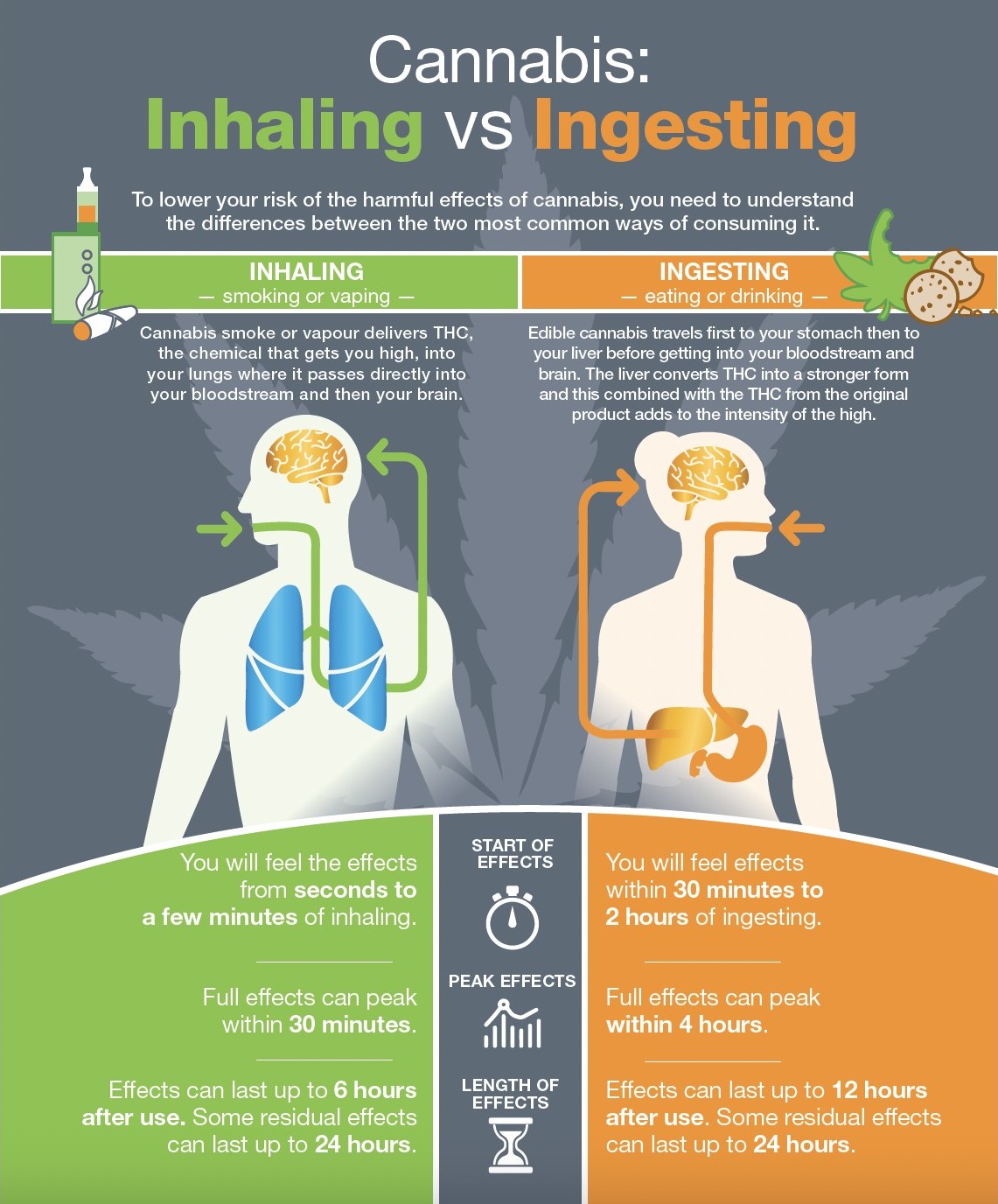
Reproduced with permission from the Canadian Centre on Substance Use and Addiction.
How it works
Whether you inhale or eat it will influence when and for how long you feel the effects.
Learn moreUnderstand the Risks
It might be safer than other drugs, but it’s not risk free. Weed can affect people differently depending on your genetics.
These are the facts. It’s your choice what you do with them.
Age isn’t just a number. It means something when we’re talking about your brain.
Your brain is still developing until you’re about 25, maybe even longer according to evolving research. Using weed when you’re younger than this can cause physical changes that rewire your brain and permanently harm memory, learning, and attention.
Your mental health matters. Our lives are stressful enough these days and it might feel like getting high helps your mental health, but long-term use can actually increase anxiety and depression. The more weed you use, the more you may need to feel good, because over time it can lower your dopamine levels.
Lungs like oxygen, not smoke.
Smoke from cannabis contains many of the same toxins and chemicals found in tobacco smoke in the same quantities and inhaling it can increase your risk of damaging your lungs. Hitting a vape pen might not leave smoke in your lungs, but it can leave other cancer-causing chemicals that damage your lung tissue.
Higher-strength or more powerful cannabis products are worse for your health. If you use products with high THC content, you’re more likely to develop problems, such as dependence or mental health problems. This can create a cycle: the more THC your brain gets, the more it needs to achieve the same high.
Maybe you’re right when you say, “that’s not me,” but the signs can be hard to see.
One in 10 cannabis users develop a cannabis use disorder (CUD), which means they can’t stop using the drug even when it negatively affects many aspects of their life, including their relationships, school, career, and physical and mental health.
Check your CUD score on pages 5 to 7 to see where you land.
Take Control to Slow your Roll
Thinking about cutting back? We got you. This resource has been designed by health experts to help make it easier for you to reduce how often you’re getting high.
CCSA’s GUIDEOther resources
If you’re looking for help with substance use or your mental health, check out these other resources from the experts:
Substance use and harm reduction services – Southeast Public Health Get health with substance use – Health Canada Substance use and addictions programs and services – CAMHThe Evidence
Looking for proof? Everything on this site came from the following research. Check it out for yourself.